
With Matty’s ashes scattered in the middle of the Bay, Margru is surfing towards Sayville in a strong, steady wind.
I aim for the Long Island Maritime Museum, where exhibits tell the story of the insular Dutch fishing community of my hometown. I begin my return at this waterfront, as it is here my life-long interest in boats took root.
I reach a marshy outcropping known as Green Point and force a jibe to make the approach to the West Sayville dock. I tie up along the bulkhead and prepare to step back in time.
I have visited more than a dozen maritime museums in the U.S. and Europe and lived on and off for a year at Mystic Seaport Museum, where the replica Amistad was built. But for me Long Island Maritime Museum is special.
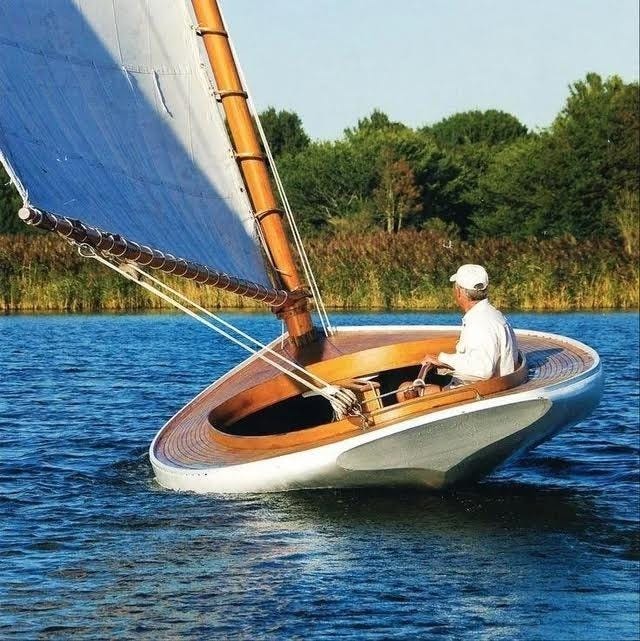
The focus here is on the life of the Baymen who harvested oysters and clams on the Great South Bay. The museum also has the world’s foremost collection of shallow-draft Catboats used on the Bay for work and pleasure for more than a century – to my eye the singularly most beautiful boats under sail.
As I walk the grassy campus, the boat shop, oyster house and relics from the glory years appear as distant artifacts yet feel close and familiar. It was a simpler time where a singular purpose set the rhythm of the tight Dutch community that thrived here on the bounty of the Bay.
I realize that this place, even more than Mystic Seaport, speaks to the origin of my passion for wooden boats.
As a boy, I romanticized the life of the Baymen and later through literature and imagination, these early memories melded into a life-long affinity for the world of sailing ships.
And that passion – combined with much else to follow – led me to the Amistad project decades later.
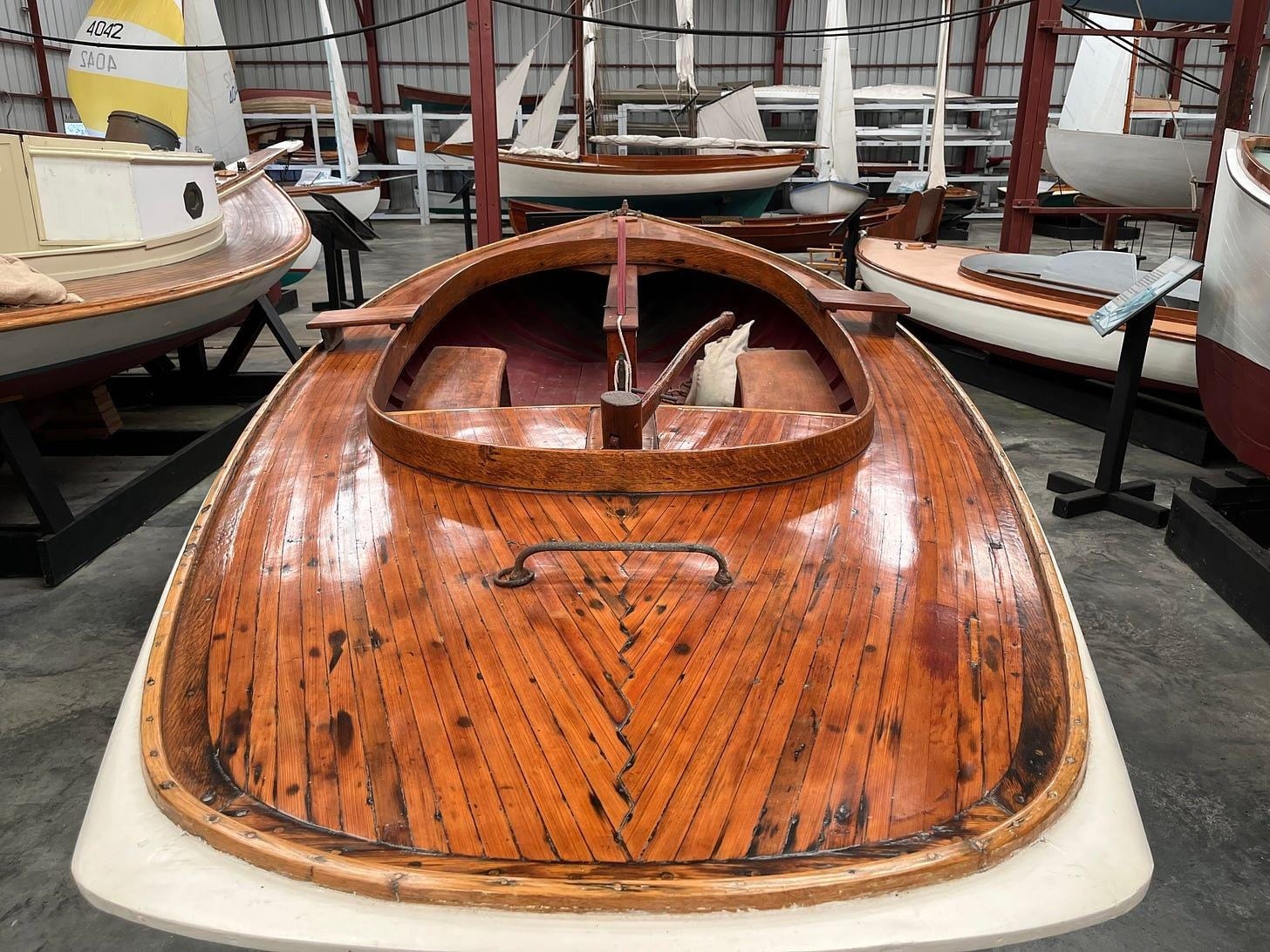
I walk into the large metal building that houses the craft collection. As I marvel at the perfectly fitted ribs, bronze hardware and curved wood coamings, I am aware that I am indulging in pure nostalgia. And I love it.
But that also makes me think of a different view of sailing ships — one that came to haunt my years with Amistad.
The glorious Age of Sail on display here, at Mystic Seaport and maritime museums around the world tells a different story for descendants of Africans once kidnapped and chained for months to the wood timbers of slave ships. Those wooden monstrosities were floating prisons, death camps, “Ships of no return,” as I once heard an African chieftain call them during a memorial ceremony in Sierra Leone.
It took climbing in slave forts on the coast of Africa and standing on an auction block at a dock in Cuba for me to fully fathom this competing symbolism of the sailing ship. It was this very schism in perspective that upended my goals for the replica Amistad.
Of course, none of this conflicted history was known to me as a boy sitting on a wooden crate for hours watching the old Dutchmen drive oakum and cotton into the seams of their boats.
But I want to recognize here how my journey to Africa and Cuba, sailing Amistad across the Atlantic seeking atonement for the slave trade, found its origins in the naïve romanticism I conjured up on this very waterfront. Even now I’m still learning that lesson.
When I was ten, my friend Jimmy and I often rode our bikes at dawn to watch the old oyster boats head into the Bay. They’d slide out of the river at first morning’s light, the mild thumping sound of the diesel engines blended with the squawks of the seagulls and teasing banter shouted between boats, as deckhands coiled ropes and set bushel baskets across the deck.
These were the last of the Dutchmen who’d worked the Bay for generations, a diminishing coterie of old men who lived in small, neat cedar-shake houses a few blocks from the dock. In their honor, West Sayville’s fire department drill team competes to this day as The Flying Dutchmen.
They were descendants of a group of Dutch settlers who emigrated in the 1850s from several fishing villages in the Netherlands. They left to escape poverty and the overbearing influence of the state church. By the 1870s Greenville, as this point of land was called then, was a Dutch-speaking, self-sufficient and insular community harvesting oysters, clams and eels.
Social life and the education of children centered around their Reformed Bible Church where services were conducted exclusively in Dutch until 1912.
As the towns of Long Island expanded, the pressure to assimilate ended Dutch church services in 1931. Then pollution and a series of storms in the 1950s led to a rapid collapse of oystering, signaling the beginning of the decline of the fishing community.
Still, as a boy in the early 1970s, I could occasionally hear exotic Dutch phrases on the docks, often related to the equipment or functions of the boats.
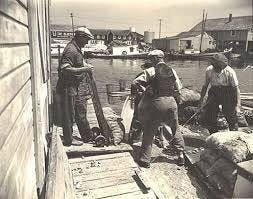
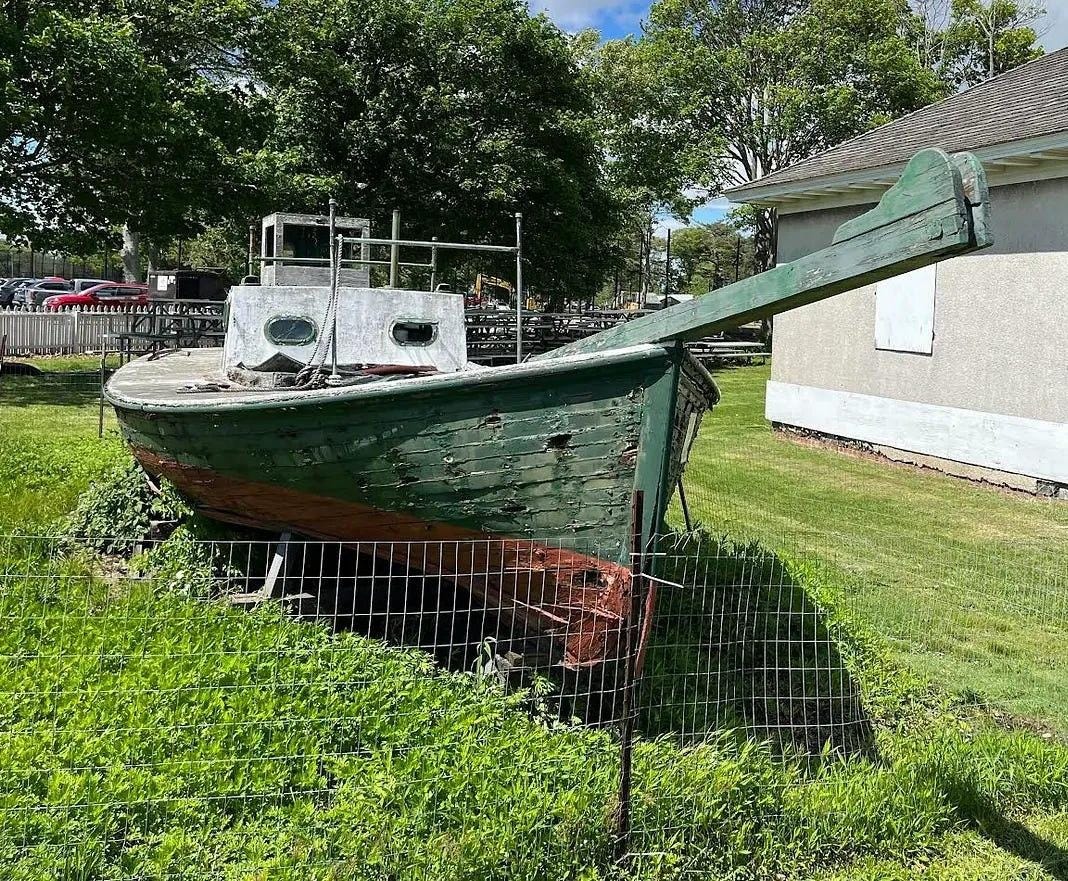
The traditional boats working by the 1970s had converted from sail to diesel and were being used mostly to harvest hard shell clams. The elegant low profile of these traditional boats made it possible to use long wood “tongs,” a scissor-like device that works like a hole digger used to set a fence post.
The Dutchmen stood along the edge of the deck and worked the tongs, haul by haul filling bushel baskets. At the dock, at the end of the day, they’d heft the baskets from the boat with a smooth swing of those chiseled arms, setting a 75-pound bushel on the dock with the gentlest touch.
I see now that as a boy I romanticized the life of the Dutchmen. They lived a predictable routine, not the volatility I dealt with at home. There was no collusion or lies, just a day of hard work and just reward. And all of it leagues away from the confusing conflict of Vietnam and the civil rights protests and race riots I watched with my father on TV every night. I wanted the resolute peace of the Baymen.
I was determined to get a boat of my own. I dragged my first one into the backyard – a worn wood rowboat abandoned in a marina for good reason. Despite weeks scraping, caulking and painting, it never floated very well or for very long. I cycled through several other rotten boats until I bought an old 19-foot wood sharpie shortly before high school.
The sharpie – called that because of its pointed bow – was a heavy, flat-bottom skiff that was constructed decades earlier by a cranky old-timer. I rebuilt her from the keel up, adding a floor and a small cabin in the back, colloquially referred to as a doghouse. I knew little of what I was doing with chisel and saw, often working to sunset doing things over several times to get them right.
I was fixated on the project. When I was done working for the day, I’d described my progress to an indifferent audience at the family dinner table. Then head to my room in the attic to lay in bed picking at splinters and planning the next step. Tomorrow couldn’t come soon enough.
If I would have been accepted by the old-timers, I knew even then that I’d find the taciturn Dutchmen and their churchgoing community repressive. I needed to be my own kind of Bayman. Besides, those days of traditional oystering and clamming were dying.
A new technique for clamming was ushering in the next generation of Baymen. And I set a course to be one of them.
The tongs used by traditional Baymen were being replaced by the “bull rake,” a sharp-toothed steel rake and basket attached to a long aluminum pole with a T-shaped handle. The clammer stood in the middle of a boat and tugged and jerked the handle as the boat drifted, skimming the rake along the bottom in long runs, gathering up the clams.
The long aluminum pole telescoped and could be set to an optimal length for the depth of water. When set correctly – and it took skill to do so – the clam rake cut through the bottom in long efficient swipes.
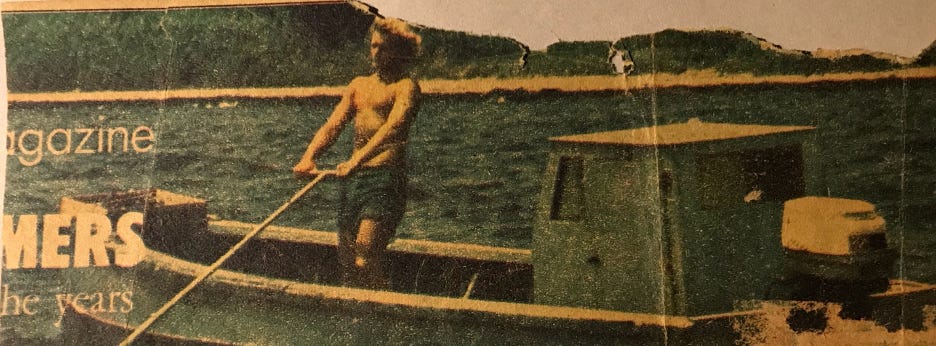
With my sharpie finally restored, I joined my friends Jimmy and Chuck and hundreds of other teenagers digging from small boats, living out the final heyday of clamming on the Bay.
Chuck and Jimmy were always far more practical (and successful) than I. They built plywood boats, coated them in fiberglass, making them watertight. They powered them with powerful new outboards and fixed a deck layout specifically designed for bull raking. My old sharpie had an old 40-horsepower outboard motor. It would take me nearly twice as long to get home than Jimmy or Chuck.
At times, I envied their faster, more comfortable, more efficient boats. But at the same time my love for that old sharpie never waned. I took pride in using the traditional caulking methods to keep my leaky boat afloat. It was a throwback to an earlier age, and I liked that distinction.
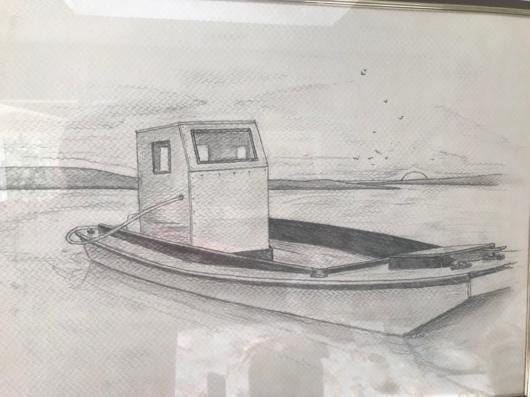
Many years later, when I first began writing about my decade running Amistad, I returned to working with wood boats. I volunteered to rebuild a centerboard post on an old oyster boat. I replaced a plank on a schooner and, in my most ambitious job, built the schooner a new rudder out of thick oak planks.
The woodworking was a comforting counterpoise to the endless hours chronicling those difficult Amistad years.
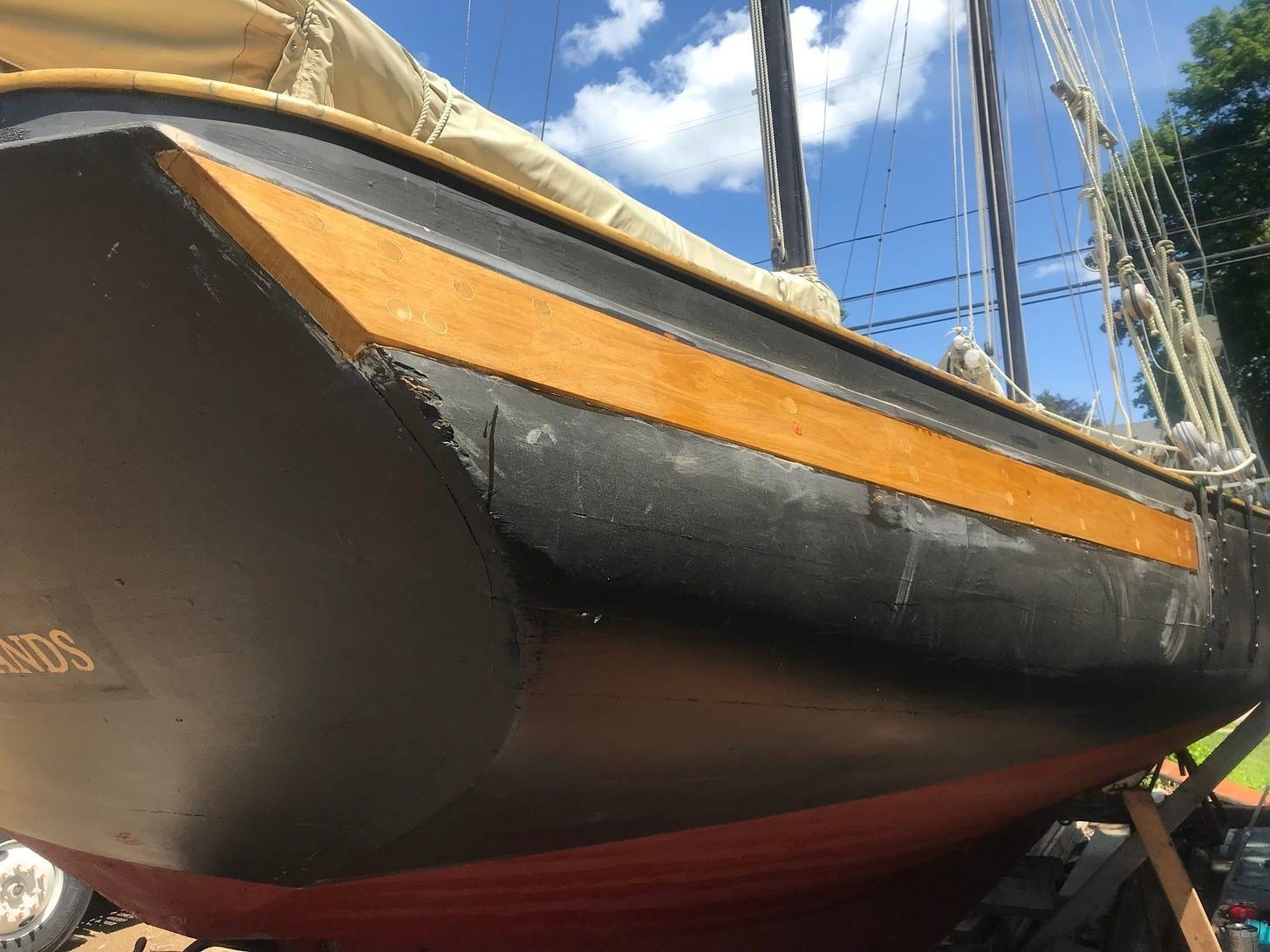
Owners of traditional wooden boats know the special feeling these vessels evoke. It’s more than nostalgia. There is an aesthetic to traditional workboats and yachts that reflects a harmony achieved over generations – an evolution that reveals the perfect configuration of wood, metal, canvas and rope.
That’s why volunteers are willing to spend decades restoring old sailing ships, and why maritime museums exist. For me, as I see it now, my days aboard my old, leaky sharpie imbued me early on with these sentiments and that helps explain why 35 years later I would walk out on a secure career to operate Amistad and later a struggling fleet of aging Tall Ships.
I walk along the floating dock and stop to look over the restored 64-foot sailboat, Priscilla – the flagship of the Long Island Maritime Museum. Shipwrights and volunteers restored the 1888 oyster dredge over the past quarter century.
Look at the sails, blocks, hardware and ropes! All of it leveraged to most effectively pull a heavy oyster dredge across the bottom. That’s why old timers called Priscilla “smart,” meaning she could work in light or heavy winds, making her a “money maker”. A perfect combination of form and function.
It dawns on me standing here, that this was also true of Amistad.
Amistad was a Baltimore Clipper, a 19th century design that perfectly harvested the wind. Her mission was speed. The complex – and dangerous – rig combined a variety of sails and stretched them to the extreme. Baltimore Clippers were the fastest ocean sailing ships of their time. And that is precisely why they were the preferred ships of pirates and illegal slave traders seeking to outrun warships enforcing the end of the slave trade.
I untie Margru and hoist the sail and glide into the Bay. The museum behind me, I am running close to the shore.
A sudden shift of wind catches me off guard and Margru jibes, but I react quickly and reel in the sheet, regaining control as the boom swings to the other side and the rope lashing creaks and moans under the stress.
That sound jogs another, less nostalgic, memory from my years running Amistad.
I was sitting in an historic pub on the waterfront in London, England. Donald George, a special ambassador from Sierra Leone, sat next to me. Across the table was William Pinkney, the first captain of Amistad.
Earlier in the day we had sailed Amistad up the Thames River past the famous Greenwich Maritime Museum and crossed the arbitrary line established by the British as the fixed point in time used to calculate longitude around the globe. An exciting event for any sailor.
We continued up the river until Amistad sailed under the iconic Tower Bridge and floated in front of the British Parliament as part of an event commemorating the 200th anniversary of the end of the slave trade. I also met the Deputy Prime Minister of England in the boardroom at the Admiralty House, the very room from which the British imposed its maritime empire for centuries.
I had traveled a long way for a boy on the Bay dreaming of Tall Ships while tugging clams out of the mud in a leaky old boat.
We had arrived in London, the epicenter of the sailing ship world.
“Guys!” I boasted with a beer in hand. “Look where we are? For centuries sailors sat at this same damn table and drank before setting off to sea!”
Capt. Pinkney, who was the first African American sailor to circumnavigate the world, knew well the history of the Age of Sail. But he didn’t seem moved at that moment by maritime enthusiasm.
But I was on a roll and read a poetic ode to the sailing ship I’d written in my notebook romanticizing “the flap of canvas and the creak of the ship’s timbers.”
“That’s enough!” Pinkney said.
I stopped and gave him a bemused look.
Donald, who could dish out his own barbed poetry when needed, looked at me.
“Boss, that creak you hear. For my people, that creak is a moan of agony, coming from the millions of us stuffed in your ships.”
After that, we drank in silence at the pitted and stained table, in the ancient sailor’s hangout, just up a cobblestone street from the waterfront where thousands of slave ships docked over centuries to finance Britain’s maritime empire.
Yeah